
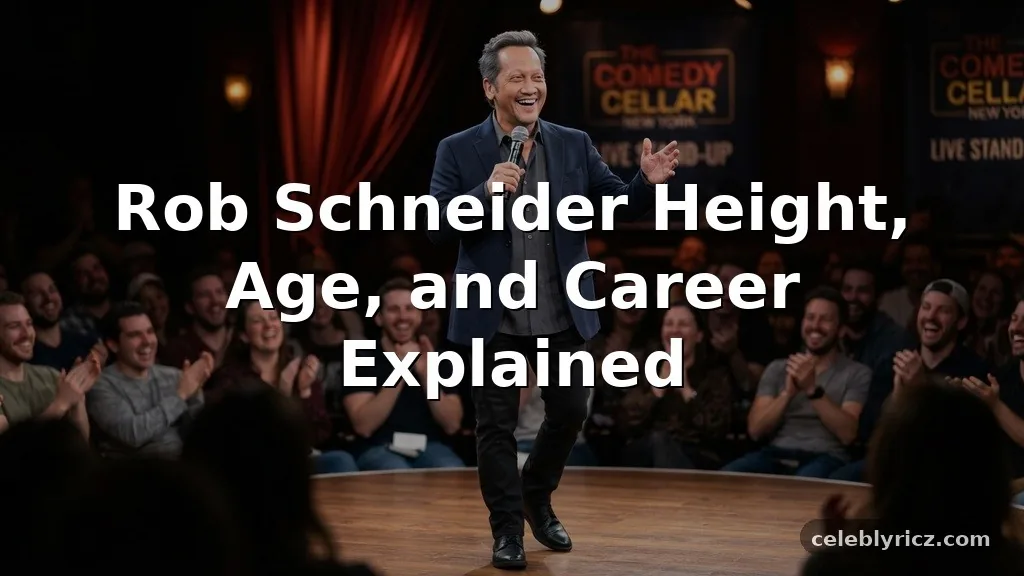

Rob Schneider’s height, age, and career remain popular search topics because his public profile spans stand-up comedy, Saturday Night Live, Hollywood films, directing, and television. Born in San Francisco on October 31, 1963, Schneider is 62 years old as of September 2026, and he is widely listed at about 5 feet 3 inches tall, or roughly 1.60 meters.
His career is more substantial than a simple list of comedy credits suggests. Schneider moved from Bay Area clubs to SNL, then built a recognizable film persona through Deuce Bigalow: Male Gigolo, The Animal, 50 First Dates, and recurring collaborations with Adam Sandler. The details below separate documented facts from estimates and disputed personal information.
At a Glance
| Fact | Verified or commonly reported detail |
|---|---|
| Full name | Robert Michael Schneider |
| Born | October 31, 1963 |
| Age | 62 as of September 2026 |
| Birthplace | San Francisco, California, United States |
| Height | Widely listed at approximately 5 feet 3 inches, or 1.60 meters |
| Profession | Comedian, actor, screenwriter, director, and producer |
| Major television credit | Saturday Night Live, 1990–1994 |
| Breakthrough film role | Deuce Bigalow in Deuce Bigalow: Male Gigolo (1999) |
| Spouse | Patricia Azarcoya Schneider, whom he married in 2011 |
| Children publicly associated with him | Daughter Elle King and daughters Miranda and Madeline |
Rob Schneider’s Height and Age
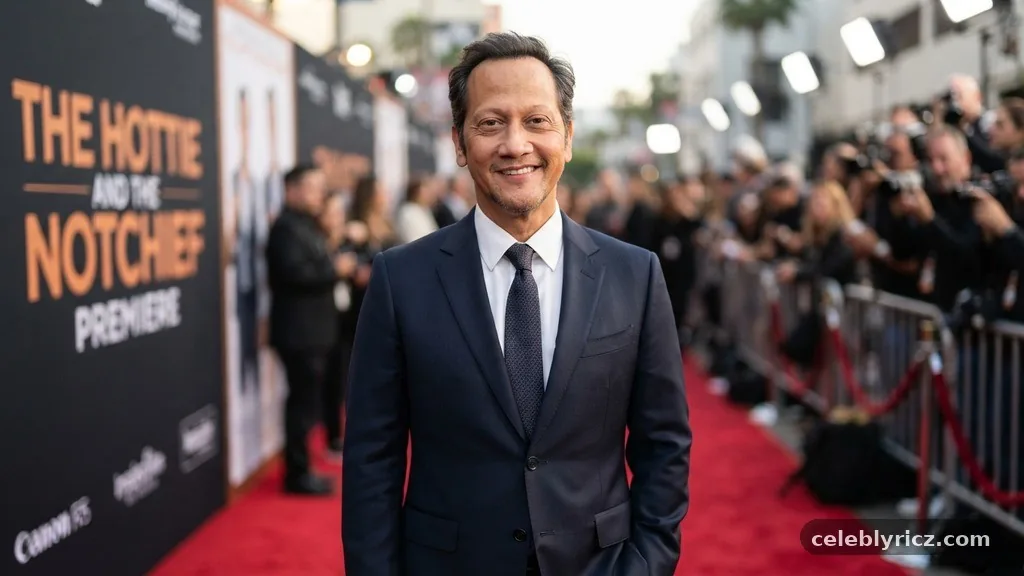
Rob Schneider is generally listed as 5 feet 3 inches tall, equivalent to approximately 160 centimeters. Height figures for entertainers often come from entertainment databases, interviews, or repeated industry listings rather than an official measurement, so the number should be treated as a widely reported estimate rather than a formally certified statistic.
He was born on October 31, 1963, in San Francisco, California. That makes him 62 years old in September 2026; he will turn 63 on October 31, 2026.
Schneider’s height became part of his public image because his comedy often depends on physical contrast. He has played characters whose confidence, eccentricity, or exaggerated behavior creates a comic mismatch with his compact frame, but his career was not built on height alone. His writing, timing, vocal impressions, and ability to play anxious or overconfident characters were more important to his rise.
The exact reason height searches remain so common is that Schneider has appeared beside many taller performers, including Adam Sandler, David Spade, and other members of the modern American comedy ensemble. On screen, camera angles and footwear can also affect apparent height, which is why different websites sometimes give slightly different figures.
Early Life in San Francisco
Schneider grew up in the San Francisco area and attended Terra Nova High School in Pacifica, California. Public biographies describe a mixed family background: his mother, Pilar, worked as a teacher, while his father, Marvin Schneider, worked as a real-estate broker and had served in the military.
His family background also connected him to different cultural traditions. His mother had Filipino ancestry, while his father was of Jewish descent, a combination Schneider has discussed as part of his identity and comedic perspective.
Comedy became a serious interest before he reached national television. During high school, Schneider began performing stand-up, and he later developed his material in Bay Area clubs, where an emerging comedian had to build an audience through repeated live performances rather than through online clips.
That early club experience mattered because stand-up taught Schneider how to control a room, test a premise, and recover from a joke that failed. Those skills transferred directly to television sketch comedy, where performers must establish a character quickly and land a scene before the audience loses interest.
Schneider’s early influences included established comedians and comedy writers working in the Bay Area and on national television. Before he became known as a film actor, he was already developing the tools that would define his later work: broad character voices, physical reactions, quick reversals, and a willingness to make himself the center of an absurd situation.
Saturday Night Live Breakthrough
Schneider joined the cast of Saturday Night Live in 1990 and remained with the program until 1994. The show gave him national exposure during a period that also included performers such as Mike Myers, Dana Carvey, Phil Hartman, Chris Farley, David Spade, and Adam Sandler.
He was not always the most prominent performer in the ensemble, but he became valuable because he could support a sketch in several different ways. Schneider played recurring characters, supplied impressions, appeared in short scene-stealing parts, and served as a dependable comic partner for stronger headline performers.
One of his best-known recurring characters was the “Office Linebacker,” an exaggerated office worker who responds to ordinary workplace situations with the aggression and ritual of an American football player. He also became associated with the “Richmeister,” a hyperactive office employee who greets coworkers with repeated nicknames such as “Moneypenny.”
His work on SNL helped establish a pattern that continued in movies: Schneider often plays a character who enters a scene with enormous energy, a peculiar physical rhythm, or an unusually strong opinion about something trivial. The joke frequently comes from how seriously that character treats an obviously ridiculous situation.
The program also connected Schneider with Adam Sandler, a relationship that later became important to both men’s filmographies. Schneider’s SNL years supplied industry credibility, while Sandler’s later film projects created repeated opportunities for Schneider to appear in supporting and cameo roles.
For a broader reference point on the program’s history and cast, the Encyclopaedia Britannica overview of Saturday Night Live provides established background on the long-running NBC series. Schneider’s four-season run placed him within one of the show’s particularly influential early-1990s ensembles.
From Sketch Performer to Film Actor
After leaving SNL, Schneider pursued film and television parts that allowed him to expand beyond short sketches. Early credits included supporting appearances in comedies such as Judge Dredd, Down Periscope, and The Beverly Hillbillies, although none immediately defined him as a leading actor.
His major film breakthrough arrived with Deuce Bigalow: Male Gigolo in 1999. Schneider played Deuce Bigalow, a socially awkward man who becomes a male escort after being drawn into an unusual arrangement. The film’s premise gave him a central role rather than the brief supporting parts he had often played after SNL.
Deuce Bigalow was built around broad physical comedy, embarrassment, and a series of unusual clients. That approach matched Schneider’s strengths as a performer, particularly his ability to make a character’s panic, confusion, and overconfidence visible without relying on long explanations.
He followed the success of the first film with The Animal in 2001, playing Marvin Mange, a man transformed by an experimental medical procedure. The film leaned heavily on physical gags and animal behavior, reinforcing the comic persona Schneider had begun to establish as a feature-film lead.
His film career during the early 2000s also included Mr. Deeds, Eight Crazy Nights, 50 First Dates, The Benchwarmers, and I Now Pronounce You Chuck & Larry. Some were leading roles, while others were ensemble appearances or cameos, but together they made Schneider a familiar face in studio comedies.
Schneider also appeared in films outside the Adam Sandler orbit. His credits include work with directors and performers across mainstream comedy, including appearances in Shark Bait, Wild Cherry, and family-oriented projects. His screen identity remained consistent: expressive, fast-moving, and comfortable with intentionally exaggerated characters.
Deuce Bigalow and His Comic Persona
The Deuce Bigalow character became Schneider’s most recognizable film creation because the role combined several elements he had developed on television. Deuce is insecure but not cynical, placed in situations that are sexually awkward without making him a conventional romantic hero, and forced to improvise as problems become more complicated.
The first film also benefited from a clear comic engine. Deuce must serve as a “male gigolo,” but he is not naturally suited to the job, so each encounter produces a clash between the professional role and his ordinary personality.
That premise allowed Schneider to use physical comedy, reaction shots, and escalating misunderstandings. He was not simply delivering jokes; he was playing a man trying to preserve dignity while the situation repeatedly strips it away.
The sequel, Deuce Bigalow: European Gigolo, arrived in 2005. It returned Schneider to the role and moved the story to Europe, but it did not receive the same level of critical approval as the original film.
Schneider’s broader comic style has often divided audiences and critics. Supporters respond to the speed and absurdity of his performances, while critics have argued that some of his films rely too heavily on crude humor and repeated physical gags.
That division is part of the explanation for his longevity. Schneider’s work has never depended entirely on prestige reviews; it has depended on a recognizable screen presence that can be inserted into an ensemble, a cameo, or a high-concept comedy and understood almost immediately.
- Physical comedy: Characters communicate through exaggerated movement, facial reactions, and awkward behavior.
- Comic panic: Ordinary problems escalate because the character responds with far more alarm than the situation deserves.
- Character voices: Schneider frequently uses unusual rhythms, accents, or vocal patterns to distinguish minor roles.
- Ensemble timing: His strongest film appearances often come in scenes shared with performers such as Adam Sandler, Rob Riggle, or David Spade.
- Self-deprecating energy: He is willing to make his own body, confidence, or social discomfort part of the joke.
Major Films and Television Work
Schneider’s filmography includes more than his two Deuce Bigalow movies. In 50 First Dates, he played Ula, a comic supporting character in the Adam Sandler and Drew Barrymore romantic comedy. The role was not the story’s emotional center, but it gave Schneider another memorable part within a commercially successful studio film.
He also appeared in The Benchwarmers, a baseball comedy released in 2006, and in Grown Ups, where he joined Sandler, Kevin James, Chris Rock, and David Spade. The Grown Ups films used an ensemble structure that gave Schneider room for comic reactions and supporting set pieces.
His voice work includes animated projects such as Eight Crazy Nights and other family or comedy productions. Voice acting suits his approach because he can create a character through vocal pace and inflection without relying on the physical appearance that defines his live-action roles.
Television remained part of his career after SNL. He starred in the CBS sitcom Rob, which premiered in 2012, and he later developed projects that drew on his family life and comedy persona. His television work has generally been more uneven in reception than his time on Saturday Night Live.
Schneider also directed and produced films, including Big Stan, released in 2007. In that project, he played a con man who prepares for prison by learning martial arts, combining the broad physical style associated with his acting with greater control over the film’s overall tone.
During the 2010s and 2020s, Schneider continued performing stand-up and appearing in film and television projects. He also released comedy specials and used independent production methods more often, reflecting the changing economics of comedy distribution.
| Period | Career development | Representative work |
|---|---|---|
| 1980s | Bay Area stand-up and early television exposure | Live comedy clubs and comedy showcase appearances |
| 1990–1994 | National television breakthrough as an SNL cast member | Saturday Night Live |
| 1995–1998 | Supporting film roles and transition into mainstream movies | Judge Dredd, Down Periscope |
| 1999–2005 | Feature-film stardom and recurring comedy collaborations | Deuce Bigalow, The Animal, 50 First Dates |
| 2006–2012 | Ensemble comedies, directing, and television leadership | The Benchwarmers, Big Stan, Rob |
| 2013 onward | Stand-up, independent projects, podcasts, and selected screen roles | Comedy specials and later film and television appearances |
Personal Life and Family
Publicly documented information identifies Patricia Azarcoya Schneider as Rob Schneider’s wife. The couple married in 2011 and have daughters together, including Miranda Scarlett and Madeline Robbie Schneider.
Schneider is also the father of singer and songwriter Elle King, whose birth name is Tanner Elle Schneider. Elle King is his daughter from his earlier relationship with model London King, and she has built a separate recording career with songs including “Ex’s & Oh’s.”
The family connection has occasionally received public attention because Schneider and Elle King have both discussed their relationship in interviews. Their family history has included periods of distance and reconciliation, but specific claims should be attributed to the people involved rather than repeated as settled fact.
Schneider’s marriage to Patricia has also influenced his later creative work. Miranda appeared in Daddy Daughter Trip, linking his family life to a film project without making every private detail part of the public record.
Questions about divorce often appear in searches about Schneider, but online summaries do not always distinguish between confirmed marriages, reported relationships, and rumors. Reliable public information confirms his marriage to Patricia Azarcoya Schneider; claims beyond documented records should not be treated as established facts.
His political views have also attracted public interest, particularly because he has expressed opinions that do not always fit the image audiences formed from his early Hollywood comedies. Political labels such as Republican, independent, or conservative should be used carefully unless tied to a clear public statement or documented affiliation.
Financial Context and Net-Worth Estimates
Rob Schneider’s income has likely come from several professional areas: acting fees, writing, directing, producing, stand-up performances, comedy specials, television work, and licensing or distribution arrangements. However, his contracts, tax records, private investments, and current assets are not publicly available in a complete and verifiable form.
For that reason, online net-worth figures should be labeled estimates, not confirmed facts. Different entertainment websites publish different totals, and many do not explain how they calculate film salaries, property values, business interests, taxes, or long-term expenses.
A major film credit does not reveal an actor’s actual take-home pay. Compensation can include a fixed salary, bonuses, residuals, backend participation, agent and manager commissions, legal costs, and taxes, while independent productions may involve different financial arrangements altogether.
Schneider’s long career provides several identifiable earning channels. His four seasons on SNL created early national visibility, his leading film roles expanded his commercial value, and his later touring and independent projects gave him ways to earn outside the traditional studio system.
- Acting: Feature films, television series, voice roles, and guest appearances.
- Writing: Comedy scripts, television material, and stand-up content.
- Directing and producing: Projects such as Big Stan and Daddy Daughter Trip.
- Live performance: Stand-up tours, theater dates, and comedy events.
- Digital distribution: Online specials, interviews, and independently released content.
No reliable public source establishes a definitive current net worth for Schneider. Readers should treat precise figures repeated without documentation as speculative, especially when the numbers are presented without dates or an explanation of methodology.
If you enjoy celebrity biographies like this one, you may also like Tony Hinchcliffe’s net worth, career & success.
Frequently Asked Questions
How old is Rob Schneider?
Rob Schneider was born on October 31, 1963. He is 62 years old as of September 2026 and will turn 63 on October 31, 2026.
How tall is Rob Schneider?
Rob Schneider is widely listed at approximately 5 feet 3 inches tall, or about 1.60 meters. The figure is commonly reported but is not presented as an official publicly certified measurement.
Where was Rob Schneider born?
He was born in San Francisco, California, on October 31, 1963. He grew up in the San Francisco Bay Area and developed his early stand-up career in Northern California.
When was Rob Schneider on Saturday Night Live?
Schneider was a cast member of Saturday Night Live from 1990 through 1994. His recurring characters included the Office Linebacker and the Richmeister.
What was Rob Schneider’s breakthrough movie?
His breakthrough leading film role was Deuce Bigalow in Deuce Bigalow: Male Gigolo, released in 1999. The movie established him as a feature-film comedy lead after his television work on SNL.
What other movies is Rob Schneider known for?
His notable credits include The Animal, 50 First Dates, The Benchwarmers, Grown Ups, Grown Ups 2, Big Stan, and I Now Pronounce You Chuck & Larry.
Is Rob Schneider married?
Yes. Rob Schneider married Patricia Azarcoya Schneider in 2011. They have daughters together, and he also has a daughter, singer Elle King, from an earlier relationship.
Who is Rob Schneider’s daughter Elle King?
Elle King is a singer and songwriter whose birth name is Tanner Elle Schneider. She is known for songs including “Ex’s & Oh’s” and has pursued a music career separate from her father’s acting and comedy work.
Does Rob Schneider have a daughter named Miranda?
Yes. Miranda Scarlett Schneider is one of Rob Schneider’s daughters with Patricia Azarcoya Schneider. Miranda appeared in the family comedy Daddy Daughter Trip.
How many times has Rob Schneider been married?
Public biographies commonly identify three marriages: to London King, to singer Elena Stepanenko, and to Patricia Azarcoya Schneider. Details about the timing and circumstances of private relationships should be checked against reliable records rather than anonymous online claims.
Is Rob Schneider a Republican?
Schneider has made public political comments and has been associated by some media outlets with conservative positions, but political labels can oversimplify a person’s views. A definitive party affiliation should not be assumed without a clear current statement or formal record.
How rich is Rob Schneider?
No independently verified public figure establishes his current net worth. Online estimates vary and should be treated as speculative because his contracts, investments, taxes, and private assets are not fully disclosed.
Final Takeaway
Rob Schneider’s height is commonly reported as about 5 feet 3 inches, and his age is 62 as of September 2026. His career moved from San Francisco stand-up comedy to Saturday Night Live, then to leading roles in Deuce Bigalow: Male Gigolo, The Animal, and a long series of ensemble films.
The clearest picture of Rob Schneider’s Height, Age, and Career comes from separating confirmed dates and credits from uncertain measurements, political labels, and net-worth estimates. His work across stand-up, acting, directing, and independent comedy explains why he remains a recognizable figure decades after his first major television breakthrough.
Explore more on CelebLyricz.