

Bob Dylan’s net worth, career, and music success are closely connected to a six-decade body of songs, recordings, performances, and publishing rights. Born Robert Zimmerman in 1941, Dylan became one of the most influential American songwriters after moving from folk clubs to the electric sound of mid-1960s rock.
His exact wealth is not publicly confirmed, but major financial estimates place his net worth in the hundreds of millions of dollars. The most important drivers are his music catalog, songwriting royalties, touring income, licensing, and reported rights deals. His artistic legacy is easier to verify: more than 60 years of recording, a Nobel Prize in Literature, and songs that permanently changed popular music.
Bob Dylan Net Worth: The Short Answer
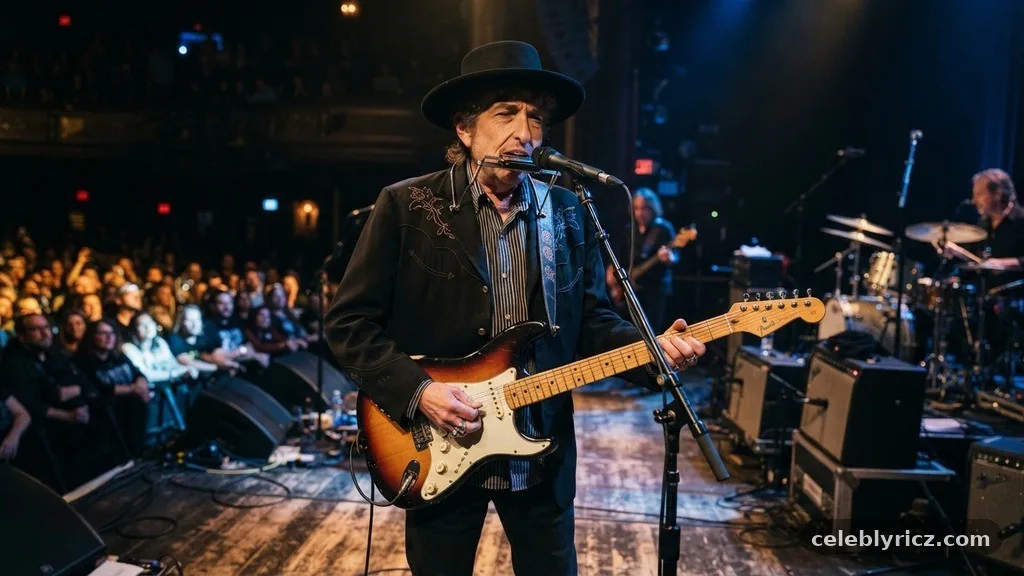
Public estimates commonly place Bob Dylan’s net worth at approximately $500 million, although no audited personal balance sheet confirms that figure. The estimate should be treated as a range rather than a precise fact because Dylan’s private investments, taxes, expenses, property holdings, and contract terms are not fully disclosed.
A major financial event came in 2020, when Universal Music Publishing Group announced an agreement covering Dylan’s songwriting catalog. The company did not publicly disclose the financial terms, while media reports placed the deal at a figure near $300 million. Reports about subsequent recording-rights transactions have also circulated, but the exact amounts and structures are not consistently public.
| Fact | Details |
|---|---|
| Full name | Robert Allen Zimmerman |
| Stage name | Bob Dylan |
| Born | May 24, 1941, in Duluth, Minnesota |
| Profession | Singer, songwriter, musician, author, and visual artist |
| Nationality | American |
| Primary genres | Folk, rock, blues, country, gospel, and Americana |
| Estimated net worth | Often reported near $500 million; not independently confirmed |
| Major honor | 2016 Nobel Prize in Literature |
The figure matters less than the assets behind it. Dylan’s financial success rests on rights that can generate income repeatedly: a song can be recorded, streamed, licensed, performed, printed, and used in film or advertising long after its original release.
Early Life and the Making of Bob Dylan
Robert Allen Zimmerman was born in Duluth and grew up in Hibbing, Minnesota. He developed an interest in American popular music, blues, country, and folk while still young, drawing influence from artists such as Hank Williams, Woody Guthrie, Little Richard, and the early rock-and-roll performers who dominated radio.
As a teenager, Zimmerman played in local groups and began experimenting with stage names. He later adopted Bob Dylan, a name associated with Welsh poet Dylan Thomas, although the choice was part of a broader effort to create an artistic identity rather than simply perform under his birth name.
Dylan moved to New York City in early 1961 and became part of the Greenwich Village folk scene. His timing was important. Folk music was moving into larger clubs, college campuses, and the civil-rights movement, giving a young songwriter with an unusual voice a platform that did not depend on conventional pop-star presentation.
His first album, Bob Dylan, was released by Columbia Records in 1962. It sold modestly at first, but Dylan’s writing quickly attracted attention from fellow musicians and influential figures in the music business.
The breakthrough came with The Freewheelin’ Bob Dylan in 1963. The album included “Blowin’ in the Wind,” “A Hard Rain’s a-Gonna Fall,” and “Don’t Think Twice, It’s All Right,” establishing Dylan as a songwriter whose work could combine protest, intimacy, historical imagery, and traditional folk structures.
- 1961: Dylan arrived in New York and began performing in Greenwich Village.
- 1962: His self-titled debut album appeared on Columbia Records.
- 1963: The Freewheelin’ Bob Dylan made him a major songwriter.
- 1964: Another Side of Bob Dylan showed his writing moving beyond straightforward protest songs.
- 1965: Bringing It All Back Home and “Like a Rolling Stone” helped redefine his public image.
The Electric Turn and His Career Breakthrough
Dylan’s career changed sharply in 1965 when he began presenting a more amplified sound. The shift was controversial among parts of the folk audience, especially after his electric performance at the Newport Folk Festival that year, but it opened a new path between folk songwriting and rock music.
Bringing It All Back Home contained both acoustic and electric material. Its songs showed that Dylan was no longer writing only in the direct topical style associated with early-1960s protest music. He was using surreal images, fragmented scenes, romantic tension, and dense literary references.
“Like a Rolling Stone” became the key commercial and cultural breakthrough. Released in 1965, the six-minute single challenged the short format then common in popular music and reached the top five in the United States. Its success demonstrated that a complicated Dylan song could become a mainstream hit without being simplified.
Highway 61 Revisited followed in 1965, with producer Bob Johnston overseeing sessions that included the musicians who became associated with Dylan’s electric sound. The album’s opening track, “Like a Rolling Stone,” and songs such as “Tombstone Blues” and “Desolation Row” expanded the possibilities of rock songwriting.
Blonde on Blonde, released in 1966, became another landmark. Recorded partly in Nashville, it combined blues, country, rock, and surreal lyric writing across a double album. “Rainy Day Women #12 & 35,” “Visions of Johanna,” “I Want You,” and “Just Like a Woman” illustrate how wide Dylan’s range had become within a short period.
This period also created an important financial foundation. Dylan owned or controlled valuable songwriting interests, and the popularity of his compositions meant that income could arrive from other artists’ recordings as well as his own albums.
Songwriting Success and the Value of a Catalog
Dylan’s songs became economically powerful because they traveled beyond his own performances. “Blowin’ in the Wind” became strongly associated with Peter, Paul and Mary, while “All Along the Watchtower” gained another major life through Jimi Hendrix’s 1968 recording.
The distinction between recording rights and publishing rights is central to understanding Dylan’s net worth. A recording is the specific audio performance released by an artist, while publishing concerns the underlying composition: lyrics, melody, and songwriting copyright.
Dylan wrote hundreds of compositions that have been recorded by other performers. These uses can produce mechanical royalties, performance royalties, synchronization fees, print income, and licensing payments, depending on the agreement and territory involved.
The most valuable songs are not necessarily the songs that sold the most copies in their first year. A composition can remain commercially useful for decades if it is covered by prominent artists, placed in films, included in advertising, or repeatedly streamed by listeners.
Universal Music Publishing Group’s reported 2020 acquisition was therefore significant. The agreement gave Universal control of Dylan’s songwriting catalog, while Dylan received a large payment or other financial consideration under terms that were not fully released to the public.
That deal also reflected a broader shift in the music business. Established catalogs became attractive to investment companies and major publishers because streaming created more predictable long-term income, while famous songs carried cultural recognition that new releases could not immediately match.
Dylan continued to benefit from his catalog before and after that agreement. The sale did not erase the importance of his songwriting career; it monetized decades of creative work in one major transaction.
Albums, Awards, and Major Achievements
Dylan’s discography includes studio albums, live recordings, bootleg collections, soundtrack work, and collaborative projects. His most influential period is often associated with the 1960s, but later records such as Time Out of Mind, Love and Theft, and Modern Times confirmed that his creative importance did not end with his early commercial peak.
Time Out of Mind, released in 1997, won three Grammy Awards, including Album of the Year. It introduced a darker, spacious production style associated with Daniel Lanois and helped establish Dylan’s late-career work as commercially and critically important.
Love and Theft arrived in 2001 and reached the top five of the Billboard 200. Modern Times, released in 2006, became Dylan’s first album to reach number one on the Billboard 200 in the United States.
His major achievements include:
- Nobel Prize in Literature, 2016: Awarded for creating new poetic expressions within the tradition of American song.
- Presidential Medal of Freedom, 2012: Presented by President Barack Obama.
- Multiple Grammy Awards: Recognizing albums, performances, and long-term influence.
- Rock and Roll Hall of Fame induction, 1988: Acknowledging his role in shaping modern popular music.
- Academy Award: Dylan won Best Original Song for “Things Have Changed” from the film Wonder Boys.
- Songwriters Hall of Fame recognition: Reflecting the lasting importance of his compositions.
The Nobel Prize changed the public conversation around Dylan. It formally recognized songwriting as a literary achievement, although his work had already been studied in universities, performed by generations of musicians, and treated as a major part of American cultural history.
For a concise record of the Nobel award and its stated reasoning, readers can consult the official Nobel Prize summary for Bob Dylan.
The Never-Ending Tour and Live Income
Dylan’s touring career has been one of the most durable in popular music. The period commonly called the Never Ending Tour began in 1988 and continued through thousands of performances, with changing band members, arrangements, and set lists.
Touring contributes to wealth in several ways. Ticket sales are the most visible source, but a major tour also generates money through merchandise, promoter guarantees, sponsorship arrangements, VIP packages, and licensing related to concert recordings or broadcasts.
Dylan’s live strategy has differed from the nostalgia-driven model used by some older acts. He has frequently rearranged familiar songs rather than reproducing the original studio versions exactly, which means audiences often hear new interpretations of songs written decades earlier.
His concerts have also helped keep older songs commercially active. A performance can prompt listeners to stream the original recording, buy an album, watch a related film, or discover a composition through another artist’s version.
Exact touring profits are not publicly available for every year. Gross ticket revenue is not the same as personal income because promoters, venues, agents, managers, production crews, transportation companies, taxes, and other costs must be paid before an artist’s final earnings are calculated.
Even with those deductions, decades of consistent touring likely made live performance an important part of Dylan’s money-making career. It also strengthened the market value of his songs by keeping his name and repertoire in public circulation.
How Bob Dylan Built His Financial Position
Dylan’s wealth comes from several connected streams rather than one permanent salary. His financial position grew as his audience expanded, his compositions were recorded by others, and his business interests became more valuable over time.
| Income source | How it contributes | Public certainty |
|---|---|---|
| Songwriting publishing | Royalties from compositions, performances, covers, and licensing | Well established; exact totals are private |
| Master recordings | Income from Dylan’s original recorded performances | Rights arrangements have been reported, but terms vary |
| Touring | Concert guarantees, ticket revenue, and related sales | Career activity is public; net profit is not |
| Album sales and streaming | Payments tied to physical, digital, and subscription listening | Revenue exists; personal share is not fully disclosed |
| Film and advertising licenses | Fees for using songs or recordings in visual media | Individual deal terms are usually private |
| Books and creative work | Income from memoirs, writing, artwork, and related projects | Documented activities; exact earnings are unknown |
The reported Universal publishing deal is the clearest example of a large, identifiable financial transaction. It converted future royalty expectations into immediate value, although Dylan may still have retained negotiated participation or other rights depending on the terms of the agreement.
It would be inaccurate to treat every reported catalog value as cash in Dylan’s bank account. A headline valuation can represent expected future income, the purchase price for certain rights, or the estimated value of an asset before taxes and transaction expenses.
For that reason, the safest description is that Bob Dylan is extremely wealthy, with estimates commonly near $500 million, but his precise net worth remains unverified. The number should not be presented as an official accounting figure.
Personal Life and Public Image
Dylan has generally maintained a private personal life, especially compared with celebrities who built their careers through television and social media. Public records identify his marriages to Sara Lownds and Carolyn Dennis, but many details of his family life have remained outside regular publicity.
He has children, including musician Jakob Dylan, who became known independently as the lead singer of the Wallflowers. Dylan’s family members have not all pursued public careers, so claims about every aspect of the family should be treated carefully unless supported by reliable documentation.
Dylan’s religious and political identity has also changed or been interpreted in different ways across his career. His work has included Jewish references, Christian imagery, political protest songs, traditional American themes, and deliberately ambiguous characters.
His public image has never been based on constant accessibility. He has often avoided explaining every lyric, declined to provide simple interpretations of songs, and allowed recordings to carry much of the conversation.
Questions about what car Dylan drives, where he lives, or whether he is personally warm with fans often produce speculation rather than dependable facts. No single, reliable public record establishes a current car, a complete property portfolio, or a universal answer about his private interactions.
That distance has been part of his cultural identity, but it also creates a reason to separate documented facts from entertaining rumor. A biography can confirm his recordings, awards, tours, and business agreements more confidently than it can describe his daily habits.
Why Bob Dylan’s Music Has Lasted
Dylan’s success is not explained only by the number of songs he wrote. His importance comes from the way he expanded what a popular song could contain: historical references, literary allusions, political argument, personal confession, humor, biblical imagery, and voices that shift from one line to the next.
His lyrics often resist a single interpretation. “Mr. Tambourine Man” can be heard as a dreamlike journey, while “The Times They Are a-Changin’” works as a direct social statement. “Tangled Up in Blue” blends memory and identity without presenting a simple chronological story.
The music also mattered. Dylan moved among acoustic folk, electric blues, country, gospel, rock, and standards rather than treating one genre as a permanent home. That flexibility allowed him to work with different musicians and reach listeners across several generations.
Other artists helped extend his influence. The Byrds, Jimi Hendrix, Joan Baez, Johnny Cash, Adele, Guns N’ Roses, and many others have recorded or performed songs associated with Dylan’s writing, each bringing a different sound and audience.
His career also benefited from reinvention. After periods of critical uncertainty, Dylan returned with strong late-career albums, continued touring, and maintained control over a distinctive artistic identity. He did not need to reproduce his 1965 sound to remain relevant.
That durability explains why his catalog became valuable to publishers and investors. The songs are not simply old recordings; they are active cultural properties with continuing use, recognition, and earning potential.
Current Status and Career Legacy
Bob Dylan remains an active cultural figure, although his public appearances and releases are more selective than they were during his early career. His work continues through recordings, performances, reissues, archival projects, books, visual art, and the ongoing use of his compositions by other artists.
At more than eight decades of age, Dylan’s career is unusual because his importance is not tied to a single comeback or one short period of popularity. His early protest songs, electric albums, later records, and live performances all contribute to the larger story.
He also occupies a rare position between popular entertainment and literary recognition. The Nobel Prize made that status official, but his influence was already visible in the work of songwriters who treated lyrics as a serious form of writing.
Financially, his legacy is likely to remain connected to rights management. The ownership and licensing of his catalog can continue producing income for years, subject to the terms of agreements, copyright law, territory rules, and future commercial use.
For readers searching “Bob Dylan net worth 2025” or “Bob Dylan net worth 2026,” the responsible answer remains an estimate rather than a confirmed annual figure. There is no public filing that establishes a precise year-by-year total, and internet pages often repeat the same rounded number without showing how it was calculated.
If you enjoy celebrity biographies like this one, you may also like Alex Warren’s net worth and music career.
Frequently Asked Questions
What is Bob Dylan’s estimated net worth?
Estimates often place Bob Dylan’s net worth near $500 million, but that amount is not confirmed by audited public records. Major catalog transactions, touring, royalties, and licensing support the view that he is worth hundreds of millions.
How did Bob Dylan make most of his money?
His principal sources have been songwriting royalties, publishing rights, master recordings, touring, album sales, streaming, licensing, and reported catalog deals. His songwriting catalog is especially important because it can generate income through many uses over a long period.
Did Bob Dylan sell his music catalog?
Universal Music Publishing Group announced a 2020 agreement covering Dylan’s songwriting catalog. Reports described the deal as worth roughly $300 million, but Universal did not publicly disclose the complete financial terms.
Who is richer, Bob Dylan or Paul McCartney?
Public celebrity-wealth estimates often place Paul McCartney’s fortune above Bob Dylan’s, but neither artist’s complete finances are publicly confirmed. Comparisons depend on how catalogs, property, investments, taxes, and private business interests are valued.
How old is Bob Dylan?
Bob Dylan was born on May 24, 1941. His age changes each year on that date, and his career has continued across more than six decades.
What is Bob Dylan’s most famous song?
There is no single official answer, but “Like a Rolling Stone,” “Blowin’ in the Wind,” “The Times They Are a-Changin’,” “Mr. Tambourine Man,” and “Knockin’ on Heaven’s Door” are among his most widely recognized songs.
Did Bob Dylan win a Nobel Prize?
Yes. He received the 2016 Nobel Prize in Literature for creating new poetic expressions within the tradition of American song.
Is Bob Dylan still performing?
Dylan’s long-running touring career has continued across many years, although schedules and performance activity can change. Current concert information should be checked through official ticketing or artist announcements rather than unsourced social-media claims.
What was Bob Dylan’s first album?
His first studio album was Bob Dylan, released by Columbia Records in 1962. It contained mostly traditional material and covers, with a smaller number of original songs.
What is Bob Dylan’s real name?
His birth name is Robert Allen Zimmerman. He adopted the professional name Bob Dylan before becoming a major recording artist.
Final Takeaway
Bob Dylan’s wealth is best understood as the financial result of an unusually durable songwriting and recording career. Estimates near $500 million are plausible but not officially confirmed, while the reported Universal publishing deal shows how valuable his catalog became.
The deeper story behind Bob Dylan net worth, career, and music success is the connection between lasting songs and lasting rights. His influence reaches from Greenwich Village folk clubs to global awards, major catalog transactions, and generations of artists who continue to record his work.