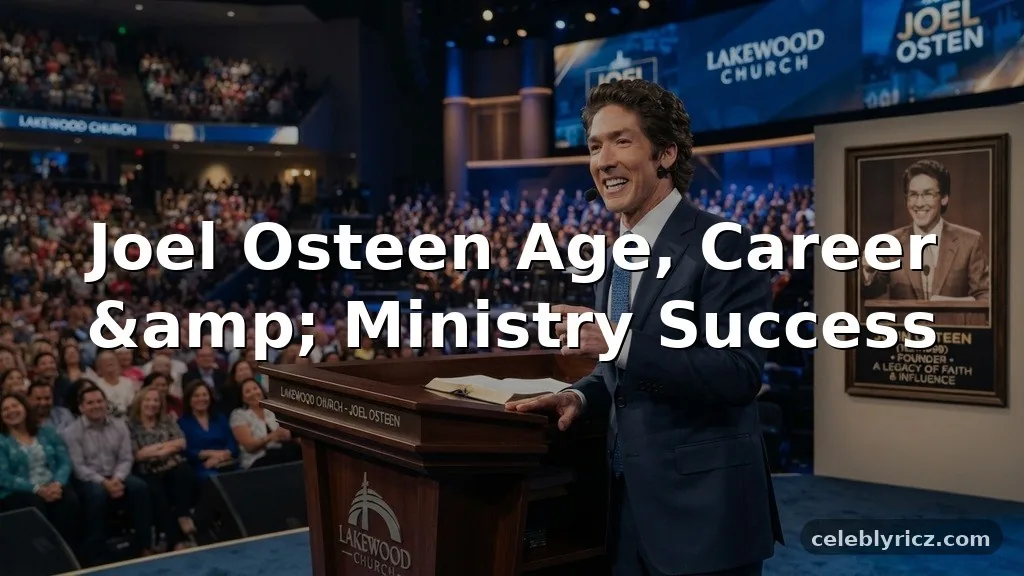

Joel Osteen’s age, career, and ministry success are closely tied to Lakewood Church, the Houston congregation he began leading after his father’s death in 1999. Born on March 5, 1963, Osteen is 63 as of September 2026, having turned 63 in March 2026.
His rise came through television, bestselling books, stadium-scale church services, and a message centered on hope, personal responsibility, and faith. The details matter because Osteen’s public profile combines pastoral leadership, publishing, broadcasting, and a highly visible family ministry in a way few American Christian leaders have matched.
Joel Osteen Age and Key Facts
Joel Osteen was born on March 5, 1963, in Houston, Texas. That makes him 63 years old as of September 2026, having turned 63 on March 5, 2026. He is an American pastor, author, television preacher, and the senior pastor of Lakewood Church.
Osteen did not begin his career as the church’s public preacher. For more than a decade, he worked behind the scenes producing his father’s television program before accepting the pulpit in 1999. That background shaped the polished broadcast style that later became central to his ministry.
| Fact | Verified detail |
|---|---|
| Full name | Joel Osteen |
| Born | March 5, 1963 |
| Age | 63 as of September 2026; turned 63 on March 5, 2026 |
| Birthplace | Houston, Texas, United States |
| Profession | Pastor, author, television broadcaster |
| Church | Lakewood Church |
| Spouse | Victoria Osteen, married in 1987 |
| Parents | John Osteen and Dodie Osteen |
| Known for | Lakewood leadership, televised sermons, and inspirational books |
Publicly available biographical information is also summarized by Encyclopaedia Britannica’s profile of Joel Osteen. Some details often repeated online, including private financial figures and exact attendance totals, are estimates or claims that are not consistently documented by independent sources.
Early Life and Family Background
Joel Osteen grew up in Houston in a large Christian family led by John Osteen and Dodie Osteen. His father was a Southern Baptist pastor who later founded Lakewood Church, while his mother became known for her own teaching and writing ministry. Joel was one of six children.
John Osteen established Lakewood Church in 1959. The congregation began in a converted feed store before developing into a major Houston ministry, but Joel’s early role was not the traditional one people might expect from a pastor’s son.
After graduating from Humble High School in the Houston area, Osteen attended Oral Roberts University but did not complete a degree. He returned to Houston and began producing his father’s television program in 1982.
That production position lasted roughly 17 years. Osteen handled the technical and editorial work that helped put John Osteen’s sermons on television, even though he initially avoided preaching in front of the congregation.
The distinction is important. His later success was not built only on family recognition; it also reflected long experience with cameras, program pacing, editing, and the demands of presenting a message to viewers who might never enter the church building.
John Osteen’s Influence
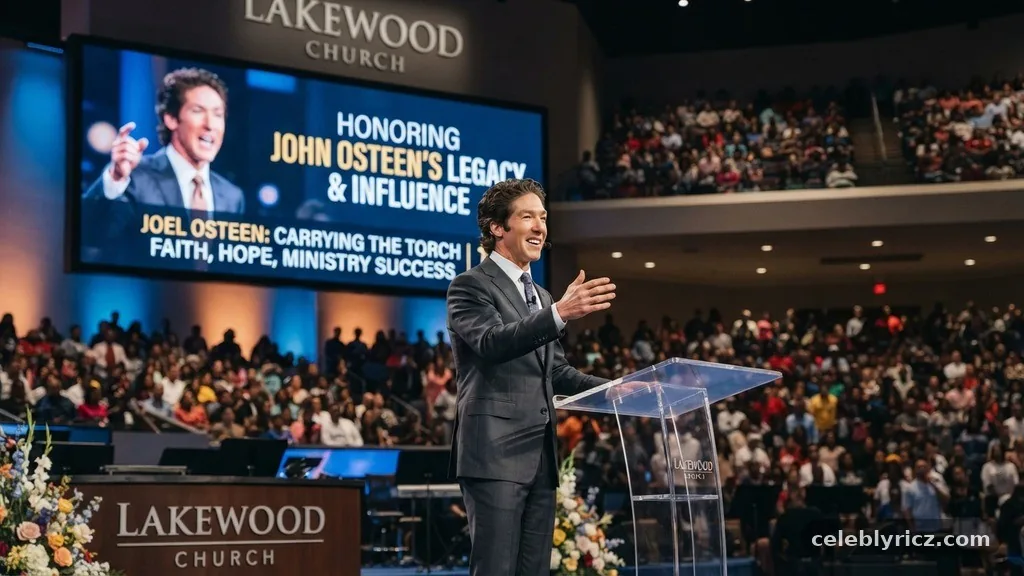
John Osteen’s ministry emphasized faith, healing, biblical encouragement, and outreach beyond traditional church walls. His television work gave Lakewood a national audience before Joel became its main public voice.
Joel has said that his father encouraged him to preach, but he remained more comfortable producing the program. That changed in January 1999, when John Osteen died after a heart attack.
Joel preached his first sermon at Lakewood shortly afterward. The succession was not simply a ceremonial transfer: he had to move from a production role into public leadership while serving a congregation that already had an established identity.
From Television Producer to Senior Pastor
Osteen became Lakewood’s senior pastor in 1999. His first major challenge was to establish credibility as a preacher while preserving the ministry’s connection to his father’s work.
The transition also coincided with a broader change in American religious broadcasting. Cable television, syndicated programming, and later online video allowed sermons to reach viewers far beyond a local congregation. Osteen’s experience behind the camera gave him an unusual understanding of how to communicate in that environment.
His sermons generally use accessible language, repeated themes, personal illustrations, and practical applications. Rather than relying heavily on academic theological terminology, he usually presents biblical passages as encouragement for people dealing with fear, setbacks, family pressure, illness, or financial uncertainty.
That approach helped him connect with viewers who might not regularly attend church. It also contributed to criticism from some Christian scholars and pastors, who argue that his preaching gives too little attention to sin, suffering, repentance, and difficult doctrinal questions.
Osteen has responded by describing his central purpose as offering hope and helping people live according to their faith. The disagreement is not about whether his message is recognizable; it is about what a sermon should prioritize.
The First Years of Leadership
During the early years of his pastorate, Osteen continued the televised ministry but increased its national reach. The weekly program became one of the defining features of his public career.
His sermons were distributed through television stations and later through digital platforms. The format was consistent: Osteen preached from a large stage, often used a personal story or everyday example, and ended with a direct appeal to trust God and pursue a more purposeful life.
By the early 2000s, his name was no longer primarily associated with his father. Joel Osteen had become the face of Lakewood Church and one of the best-known American televangelists.
Lakewood Church and the Houston Expansion
Lakewood’s growth under Osteen required a building larger than the church’s former facilities. In 2005, the congregation moved into the former Compaq Center in Houston, a sports arena that had previously been home to the Houston Rockets.
The facility was renovated and became Lakewood Church’s current home. Its scale changed the visual identity of the ministry: services could be staged for a large in-person audience while also functioning as television productions.
The move gave Lakewood a prominent physical location in Houston and an auditorium suited to music, lighting, large screens, and broadcast equipment. It also made the church more recognizable to visitors and television viewers who associated Osteen with major public events rather than a small local pulpit.
Reported attendance figures vary depending on whether they refer to weekly worshippers, special events, or the number of people reached through broadcasts. Reliable sources do not always use the same method, so precise comparisons should be treated cautiously.
Even with that qualification, Lakewood became one of the largest and most visible congregations in the United States. The church’s reach rests on several connected activities:
- Weekly worship services in Houston.
- Televised sermons distributed nationally and internationally.
- Books and study materials based on Osteen’s preaching.
- Special services, conferences, and holiday broadcasts.
- Volunteer and charitable work organized through the church and its partners.
The building itself is only part of the story. Lakewood’s success comes from coordinating a physical congregation with a media operation, publishing program, music ministry, and recognizable family leadership.
Television, Broadcasting, and Public Reach
Television was the foundation of Osteen’s national career. His father had already created a broadcast ministry, but Joel expanded the presentation and distribution after becoming pastor.
The program typically features a full worship service or a sermon edited for broadcast. Osteen’s calm delivery, direct vocabulary, and positive framing made the program easy to follow for viewers who had little familiarity with Lakewood or with Pentecostal church culture.
His message often begins with an ordinary experience: a difficult workplace, strained relationship, health concern, or missed opportunity. He then connects that experience to a biblical passage and encourages the audience to resist despair.
That television style has practical advantages. Viewers can understand the central point without extensive background, and the same sermon can be adapted for a church service, a broadcast, a podcast, a book excerpt, or a short social-media video.
It has also created limits. A message designed for broad appeal may avoid the internal disputes and detailed theological arguments that are common in seminary preaching. Critics say this can make Osteen’s sermons feel selective, while supporters say the clarity helps people who are searching for immediate encouragement.
Digital Distribution
Osteen’s ministry later expanded beyond traditional television through websites, streaming services, podcasts, and social platforms. Those outlets allow Lakewood to maintain contact with people who watch from outside Houston or who prefer online worship.
The digital model also makes the ministry less dependent on a single broadcast schedule. A sermon can circulate in multiple formats, while short clips can introduce Osteen to people who have never watched a complete service.
His broadcast success shows why television remains important in understanding his career. It was not merely a publicity tool; it was the principal channel through which his voice became nationally familiar.
Books and the Development of Osteen’s Message
Publishing transformed Osteen’s ministry from a television-centered career into a wider personal brand. His first major book, Your Best Life Now: 7 Steps to Living at Your Full Potential, was published in 2004.
The book became a major commercial success and introduced his core ideas to readers who might never watch Lakewood. Its title captured the emphasis of his preaching: faith should shape a person’s outlook, decisions, confidence, and expectations.
Osteen followed it with Become a Better You: 7 Keys to Improving Your Life Every Day in 2007. Later books included Every Day a Friday, You Can You Will, Think Better, Live Better, and Blessed in the Darkness.
The books tend to share several characteristics. They use short chapters, personal stories, biblical references, positive declarations, and practical advice about habits or attitudes. The writing is designed for general readers rather than for clergy or students of theology.
His publishing strategy also reinforced the ministry’s central vocabulary. Words such as hope, favor, purpose, restoration, and blessing appear repeatedly because they address the emotional concerns Osteen believes bring people to church and religious media.
Why the Books Sold
Osteen’s books benefited from his existing television audience, but distribution alone does not explain their longevity. The books offer readers a simple framework that can be revisited during stressful periods, and each chapter usually ends with a memorable takeaway.
The style is also highly adaptable. A sermon can become a book chapter, a chapter can become a short television message, and the same theme can be discussed in a church service or interview without major changes.
That consistency has helped Osteen build recognition across different media. Readers may know him from a bookstore, television program, online clip, or live service and still encounter the same basic message.
What Explains Joel Osteen’s Ministry Success?
Osteen’s success is best understood as the result of several reinforcing strengths rather than one breakthrough. He inherited a functioning church and broadcast operation, but he also made decisions that expanded their reach and made the message more accessible.
His production background was especially valuable. Osteen knew how to structure a program, prepare for cameras, keep a service moving, and communicate to viewers who were not physically present.
He also chose a clear preaching identity. The central promise is not that life will be free of difficulty, but that people can face difficulty with faith, discipline, gratitude, and confidence in God.
Supporters often say this emphasis gives people emotional strength. They point to viewers who discovered Lakewood during illness, grief, unemployment, or family crisis and found the broadcasts easier to approach than formal religious instruction.
Critics argue that the approach can sound overly optimistic. They question whether references to prosperity and personal blessing give sufficient attention to structural poverty, tragedy, or the experiences of people whose circumstances do not improve despite sincere faith.
Both observations help explain the size of Osteen’s audience. His style is broad enough to attract people who want encouragement, while its simplicity also invites debate among those who expect a more doctrinal or socially confrontational ministry.
Operational Factors
Lakewood’s ministry success also reflects organization. Large services require musicians, technicians, ushers, administrators, communications staff, children’s programs, security, and volunteers.
Osteen’s public image remains closely connected to his family. Victoria Osteen has preached, written books, and participated in the church’s leadership, while their children Jonathan and Alexandra have appeared in ministry roles and musical presentations.
The family structure gives Lakewood continuity, but it also concentrates public attention on the Osteen name. That makes the ministry easily recognizable and means that family decisions can become part of public discussion.
Personal Life and Family Ministry
Joel Osteen married Victoria Osteen in 1987. Victoria is a co-founder of Lakewood Church’s women’s ministry and has written books including Love Your Life and Exceptional You.
The couple have two children, Jonathan and Alexandra. Both have been involved in Lakewood’s music and ministry activities, although public roles can change over time.
Osteen’s family life is documented more clearly than many private details circulated online. Claims about exact property values, daily routines, and family finances should not be treated as established facts unless supported by a reliable public record.
The family’s role illustrates how Lakewood operates as both a congregation and a recognizable ministry household. Joel is the principal preacher, Victoria has her own public teaching profile, and their children have participated in worship and outreach.
Hurricane Harvey and Lakewood’s Shelter Role
In August 2017, Hurricane Harvey caused catastrophic flooding across Houston and surrounding areas. Lakewood Church initially faced criticism after reports that the building was not immediately open as an emergency shelter.
Church representatives said flooding and access conditions affected the facility’s availability. Lakewood later opened its doors as a shelter and received displaced residents, while volunteers helped with supplies, meals, and relief work.
The episode became one of the most discussed moments in Osteen’s public career because it connected his pastoral message to a specific local emergency. It also showed why large religious institutions can face intense expectations during disasters.
Lakewood’s response was later associated with shelter operations and recovery assistance. The event remains relevant to assessments of Osteen because it moved the ministry from television encouragement into a highly visible humanitarian setting.
Financial Context and Public Estimates
Joel Osteen’s finances are frequently searched online, but exact figures are difficult to verify. Media estimates of his net worth vary substantially, and no single independently audited public figure should be presented as definitive.
Osteen has said that he does not receive a salary from Lakewood Church. Public accounts have attributed his income to book royalties, speaking-related activity, and other ministry-associated sources, but the complete structure of his personal finances is not publicly itemized.
That distinction matters. A church’s revenue, a pastor’s compensation, book income, household assets, and charitable spending are separate categories. Combining them into one number can create a misleading picture.
Lakewood is a large religious organization with operating costs that may include staff, facilities, production, music, security, programs, broadcasting, and outreach. The church’s scale does not automatically establish what Joel Osteen personally owns or receives.
Public estimates are therefore best labeled as estimates, not confirmed net worth. Readers should be cautious with websites that publish an exact dollar figure without identifying financial documents, tax records, court filings, or a credible reporting source.
Does Osteen Receive a Church Salary?
Osteen has publicly stated that he does not take a salary from Lakewood. That statement does not mean his books or other professional activities generate no income; it means those activities should not automatically be described as a regular pastoral paycheck.
Because private contracts, royalty arrangements, and household finances are not fully disclosed, a precise annual income cannot be responsibly stated. The most accurate summary is that his public income sources are associated primarily with publishing and speaking, while viral net-worth claims remain unconfirmed estimates.
Public Debate, Message, and Continuing Status
Osteen has remained a prominent Christian communicator because his message is easy to recognize and distribute. He rarely presents himself as a political preacher, even though public figures and political leaders have appeared at or interacted with Lakewood-related events.
Donald Trump is among the political figures connected to public discussions involving Osteen. Questions about what Osteen said about Trump often arise because pastors can become politically relevant without formally endorsing a candidate.
Osteen has generally emphasized prayer, faith, and personal conduct rather than building his ministry around a party platform. That position appeals to viewers who prefer religious encouragement without sustained political commentary, while others criticize him for not addressing political issues more directly.
His ongoing visibility also comes from the durability of the Lakewood model. The congregation has a permanent Houston campus, a large production operation, a publishing catalog, and a family leadership structure that can continue beyond one sermon or one broadcast.
At the same time, Osteen’s future influence will depend on succession and adaptation. Younger audiences consume religious media through short video, podcasts, and social networks, so Lakewood must continue translating its traditional television format for newer platforms.
For now, publicly available information indicates that Osteen remains associated with Lakewood Church, its broadcast ministry, and its major public events. Claims about a dramatic change in his role should be checked against official church announcements or reputable reporting rather than social-media speculation.
If you enjoy celebrity biographies like this one, you may also like how much Jack Hibbs is worth and Jack Hibbs’ salary and net worth.
Frequently Asked Questions
How old is Joel Osteen?
Joel Osteen was born on March 5, 1963. He is 63 years old as of September 2026 and turned 63 on March 5, 2026.
Who is Joel Osteen’s wife?
Joel Osteen’s wife is Victoria Osteen. They married in 1987, and she is also a published author and a public ministry leader associated with Lakewood Church.
How many times has Joel Osteen been married?
Publicly documented information indicates that Joel Osteen has been married once, to Victoria Osteen. They have two children, Jonathan and Alexandra.
When did Joel Osteen become pastor of Lakewood Church?
He became Lakewood’s senior pastor in 1999 after the death of his father, John Osteen. Before that, Joel had produced the church’s television program for many years.
Where is Lakewood Church located?
Lakewood Church is located in Houston, Texas. Since 2005, it has worshipped in the former Compaq Center, a large arena that was renovated for church use.
Does Joel Osteen receive a salary from Lakewood Church?
Osteen has said that he does not receive a salary from Lakewood Church. His income has been associated publicly with books and speaking-related activities, but exact personal financial details are not fully disclosed.
What is Joel Osteen’s best-known book?
His best-known book is widely considered to be Your Best Life Now: 7 Steps to Living at Your Full Potential, published in 2004. It helped expand his audience beyond television and Lakewood’s congregation.
What happened to Lakewood Church during Hurricane Harvey?
Lakewood faced criticism after the Houston building was not immediately available as a shelter during the early phase of Hurricane Harvey in 2017. The church later opened its doors and participated in shelter and relief efforts.
Final Takeaway
Joel Osteen’s age, career, and ministry success are best understood through the connection between family succession, television production, Lakewood Church, publishing, and a carefully consistent message of hope. Born in 1963, he moved from producing his father’s broadcasts to leading one of America’s most recognizable congregations.
Financial claims should be treated as estimates unless supported by reliable documentation, while his public achievements are easier to verify through Lakewood’s history, his books, and his long-running broadcasts. Readers who want to follow his current work should rely on official church announcements and established reporting rather than unsourced viral figures.