
Slash is the most recognizable guitarist on the planet — top hat, sunglasses, curtain of curls, and a Gibson Les Paul that has defined rock music for four decades. The 61-year-old British-American legend turned a London childhood and a Sunset Strip adolescence into one of the greatest careers in rock history.
This profile covers Slash’s age, career, and music success as of 2026. It follows Saul Hudson from Hampstead to Hollywood, through the Guns N’ Roses explosion, the wilderness years of Snakepit and Velvet Revolver, the solo renaissance with Myles Kennedy, and the triumphant 2016 reunion.
His story is about more than riffs. It is about survival, reinvention, and the rare art of staying relevant across generations.
Slash Quick Facts
| Fact | Details |
|---|---|
| Real name | Saul Hudson |
| Born | July 23, 1965, Hampstead, London |
| Age (2026) | 61 years old |
| Zodiac sign | Leo |
| Height | 5 ft 10 in (1.78 m) |
| Nationality | British-American |
| Occupation | Musician, songwriter, record producer |
| Years active | 1981–present |
| Bands | Guns N’ Roses, Velvet Revolver, Slash’s Snakepit, Myles Kennedy & the Conspirators |
| Signature gear | Gibson Les Paul; top hat |
| Parents | Anthony Hudson (artist), Ola J. Hudson (costume designer) |
| Spouses | Renee Suran (1992–97); Perla Ferrar (2001–18) |
| Children | London Emilio (b. 2002), Cash Anthony (b. 2004) |
| Partner | Meegan Hodges |
| Estimated net worth | $90–120 million (unconfirmed) |
Who Is Slash?
Slash — born Saul Hudson — is a British-American musician, songwriter, and record producer best known as the lead guitarist of Guns N’ Roses. His blues-based playing and unforgettable solos made him one of the most influential guitarists in rock history.
He rose to fame with Guns N’ Roses in the late 1980s, left in 1996 amid disputes with Axl Rose, and built successful second and third acts with Slash’s Snakepit, the supergroup Velvet Revolver, and his solo band featuring Myles Kennedy and the Conspirators.
In 2016, he rejoined Guns N’ Roses for the Not in This Lifetime reunion tour — one of the highest-grossing tours of all time — and remains with the band.
He was inducted into the Rock and Roll Hall of Fame as a member of Guns N’ Roses in 2012, and his top hat and Les Paul are among rock’s most iconic images.
Slash Age and Early Life
Slash was born Saul Hudson on July 23, 1965, in Hampstead, London, making him 61 years old as of 2026. He turned 61 in July 2026.
He was born into the arts: his father, Anthony Hudson, was an artist who designed album covers for Neil Young and Joni Mitchell; his mother, Ola J. Hudson, was a costume designer who worked with David Bowie, Ringo Starr, and Janis Joplin. He has a younger brother, Albion “Ash” Hudson.
The family moved to Los Angeles when Slash was five. He attended Beverly Hills High School, where he was a classmate of future star Lenny Kravitz and befriended future GNR drummer Steven Adler.
The nickname “Slash” came from family friend and actor Seymour Cassel, who reportedly gave it to the hyperactive teenager because he was always moving — always slashing through life at full speed.
The Sunset Strip Years
Teenage Saul Hudson found his world on LA’s Sunset Strip, where glam metal was exploding. He picked up the guitar and never put it down, practicing obsessively.
His early bands read like a map of the Strip scene: Tidus Sloan (1981), Road Crew, Hollywood Rose, and Black Sheep. Each taught him something — stagecraft, songwriting, survival.
In 1984, he met Axl Rose. The two became friends before they became collaborators, bonding over a shared hunger to be bigger than the Strip.
When Guns N’ Roses formed in the mid-1980s — Slash, Axl, Duff McKagan, Izzy Stradlin, and Steven Adler — the chemistry was immediate and volatile. The most dangerous band in the world was born.
Appetite for Destruction: Taking Over the World
Guns N’ Roses’ 1987 debut, Appetite for Destruction, is one of the best-selling albums in history. Slash’s riffs — “Welcome to the Jungle,” “Sweet Child o’ Mine,” “Paradise City” — became the defining guitar sounds of a generation.
The “Sweet Child o’ Mine” solo alone secured his immortality: a melody so perfect it transcended rock and entered the general culture. Everyone knows it, even people who have never bought a rock record.
The band’s rise was meteoric and chaotic. GNR were the biggest, wildest band on earth — and Slash, top hat low over his eyes, was their visual anchor.
G N’ R Lies (1988) and the twin Use Your Illusion albums (1991) cemented the reign. Use Your Illusion II hit number one; the band sold over 100 million records worldwide.
Leaving Guns N’ Roses (1996)
By the mid-1990s, the partnership with Axl Rose had fractured. Creative disputes, control battles, and the sheer exhaustion of being Guns N’ Roses tore the classic lineup apart.
Slash left in 1996. For a guitarist so identified with a band, walking away was an enormous risk — the kind that ends careers.
Instead, it began his second act. Slash’s Snakepit released It’s Five O’Clock Somewhere (1995) and Ain’t Life Grand (2000), letting him explore blues-rock outside the GNR machinery.
The wilderness years proved something important: Slash was not just GNR’s guitarist. He was a bandleader in his own right.
Velvet Revolver: The Supergroup
In 2003, Slash, Duff McKagan, and Matt Sorum joined forces with Stone Temple Pilots singer Scott Weiland and guitarist Dave Kushner to form Velvet Revolver — one of rock’s great supergroups.
The debut, Contraband (2004), was a genuine triumph: number one on the charts, and the single “Slither” won the Grammy for Best Hard Rock Performance. Libertad followed in 2007.
Velvet Revolver proved Slash could build a new band from scratch and conquer again. The chemistry was real, the songs were genuinely strong, and the tours were absolutely massive.
Weiland’s departure in 2008 ended the band, but the two albums remain essential — and the Grammy validated Slash as more than a sideman.
Solo Career: Myles Kennedy and the Conspirators
Slash’s solo career became his most sustained project: the self-titled Slash (2010), Apocalyptic Love (2012), World on Fire (2014), and Living the Dream (2018), all featuring Myles Kennedy and the Conspirators.
The partnership with Kennedy — one of rock’s great modern singers — gave Slash a consistent creative foil. The albums are lean, melodic hard rock, and the tours are relentless.
Songs like “Anastasia” became modern Slash classics, proving his songwriting had not dimmed. The Conspirators era is arguably his most consistent body of work.
Like fellow guitar icons we profile — from Amy Lee, who similarly built a career on distinctive musicianship, to Dwight Yoakam, another lifer who never stopped touring — Slash shows that craft sustains careers.
The 2016 Reunion: Not in This Lifetime
In 2016, the impossible happened: Slash and Axl Rose reconciled, and the classic-era Guns N’ Roses reunited for the Not in This Lifetime tour.
The tour became one of the highest-grossing in history, playing stadiums worldwide to multi-generational crowds. Fans who had waited 20 years finally saw Slash and Axl share a stage again.
The reunion was more than nostalgia. The band sounded ferocious, Slash’s playing was as sharp as ever, and the shows proved the chemistry had survived the decades. For fans who never thought they would see it, each night was a kind of rock and roll miracle — the impossible made routine, stadium after stadium.
Slash remains with Guns N’ Roses while simultaneously continuing his solo work — the best of both worlds, and a relentless schedule that would exhaust musicians half his age.
The Top Hat, the Les Paul, the Image
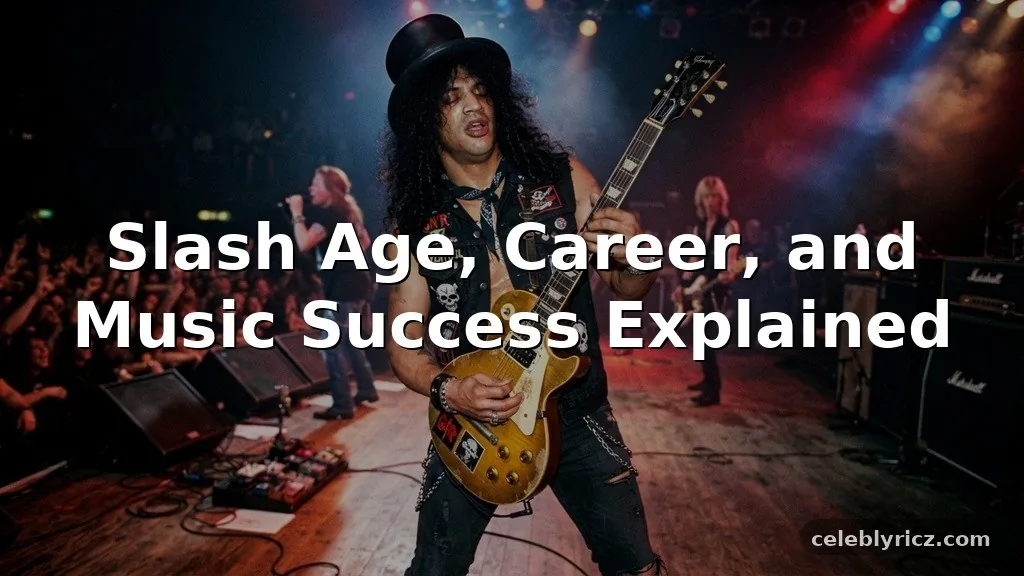
Slash’s image is as famous as his playing: the top hat, the sunglasses, the wall of curls, the Gibson Les Paul slung low. It is one of rock’s great uniforms.
The top hat story is simple: he found it in a shop, liked how it looked, and essentially never took it off again. Decades later, it is inseparable from the man.
His Gibson Les Paul signature models are among the company’s best-selling artist guitars. Generations of players bought a Les Paul because of Slash.
The image works because the playing backs it up. Style without substance fades; Slash has both in abundance, which is why the silhouette still electrifies arenas at 61.
Personal Life
Slash married model Renee Suran in 1992; they divorced in 1997. In 2001, he married Perla Ferrar, with whom he has two sons: London Emilio (born 2002) and Cash Anthony (born 2004). The divorce was finalized in 2018.
He later rekindled his relationship with Meegan Hodges, whom he first dated in 1989 and reconnected with in 2015. The rekindled romance has been a stabilizing chapter.
He has been open about his past excesses and his commitment to sobriety — a journey that preserved both his health and his career. The wildest man in rock became one of its most disciplined survivors.
He maintains a relatively private lifestyle focused on music, family, and philanthropic efforts including zoo association work.
Slash Net Worth
Slash’s net worth is estimated between $90 million and $120 million, though no official figure has been confirmed. Estimates vary by source and year.
The wealth comes from Guns N’ Roses’ 100 million+ records sold, the massively lucrative reunion tours, Velvet Revolver and solo album sales, Gibson endorsement deals, merchandise, and real estate investments including luxury Los Angeles properties.
Touring is the engine: GNR’s stadium tours generate enormous revenue, and Slash’s cut — as a core member and draw — is substantial.
Like Forrest Frank, who built wealth through relentless touring and recording, Slash proves the music business rewards those who never stop working.
Guitar Style: What Makes Slash Slash
Slash’s playing is rooted in the blues — the bending, crying, singing quality of B.B. King and Eric Clapton filtered through hard rock aggression. His solos are melodic: you can hum them.
That melodicism is his signature. Where many shredders prioritize speed, Slash prioritizes song. The “Sweet Child o’ Mine” solo, the “November Rain” outro, the “Paradise City” runs — each serves the song first and shows off second.
His tone is equally distinctive: a thick, warm Les Paul growl, usually through Marshall amps, with just enough gain to snarl and enough clarity to let every note sing. Guitarists spend entire careers chasing that sound.
He is consistently ranked among the greatest guitarists of all time — and unlike many on those lists, his influence is audible in every rock band that followed. Ask a room of guitarists who made them pick up the instrument, and Slash’s name comes up more than almost anyone’s.
The Snakepit Interlude
Slash’s Snakepit is often treated as a footnote; it deserves better. Formed during the GNR fracture, the band released It’s Five O’Clock Somewhere (1995) and Ain’t Life Grand (2000).
The albums are loose, bluesy hard rock — Slash unfiltered by committee. They did not match GNR’s sales, but they kept him playing, writing, and leading during the years when he could have disappeared.
More importantly, Snakepit proved he did not need the Guns N’ Roses machine. The confidence built in those years powered everything after: Velvet Revolver, the solo career, and eventually the reunion on his own terms.
Every great second act needs a first step. Snakepit was Slash’s.
Awards and Honors
Slash’s trophy case spans decades. With Velvet Revolver, he won the Grammy Award for Best Hard Rock Performance for “Slither” — plus multiple Grammy nominations for Contraband.
In 2012, he was inducted into the Rock and Roll Hall of Fame as a member of Guns N’ Roses — the ultimate institutional recognition.
He has been honored by guitar publications and institutions too numerous to list, and his signature Gibson models are among the most successful artist guitars ever made.
But his real award is ubiquity: the riffs are part of the culture now, played by wedding bands and stadium headliners alike.
Gear, Endorsements, and the Business
Slash’s relationship with Gibson is one of music’s great partnerships. His signature Les Paul models — with their distinctive finishes and appointments — are perennial best-sellers.
The endorsement extends beyond guitars: Marshall amps, Dunlop gear, and a merchandise empire built on one of rock’s most licensable images. The top hat silhouette sells everything.
These deals are not vanity projects; they are significant income streams. An artist of Slash’s stature commands top-tier endorsement money, and the Gibson partnership alone has spanned decades — one of the longest and most successful artist-brand relationships in the guitar world.
His business acumen is genuinely underrated. While the image is pure rock and roll abandon, the career management — bands, brands, tours, catalog — has been shrewd.
Sobriety and Survival
Slash has been candid about his past excesses — the GNR years were famously wild — and about his commitment to sobriety. It is one of the most important stories of his career.
Many of his peers did not survive the era. Slash did, and he credits getting clean with saving his life and his playing. The discipline of sobriety replaced the chaos.
That hard-won survival gives his later work its weight. When a 61-year-old Slash plays “Sweet Child o’ Mine,” it is not nostalgia — it is testimony.
His openness has helped fans facing their own struggles. Rock stars who talk honestly about recovery do real good.
Legacy: The Last Guitar Hero
Slash may be the last true guitar hero — the last player whose image and sound are universally known, who inspired millions to pick up the instrument.
His influence runs through generations: the 80s kids who learned “Sweet Child,” the 90s kids who found Velvet Revolver, the 2000s kids who discovered him through Guitar Hero, the 2010s kids who saw the reunion, and the 2020s kids discovering him through streaming. Five decades of new fans, one unmistakable sound.
Each generation finds him anew because the music does not age. Great riffs are timeless; Slash wrote a catalog of them.
At 61, still touring stadiums, still recording, still wearing the hat — Slash is not a memory. He is a going concern, and rock is better for it.
Slash in 2026: Still Roaring
As of 2026, Slash remains one of rock’s hardest-working musicians. Guns N’ Roses continues to tour, his solo work with Myles Kennedy and the Conspirators continues, and his schedule would exhaust artists half his age.
The 61-year-old shows no signs of slowing. Recent years have brought continued stadium dates, festival headlines, and the kind of late-career creative consistency few rock stars achieve.
His playing, by all accounts, is as sharp as ever — some argue sharper, refined by decades and focused by sobriety. The fire never left; the technique only improved.
For fans, every show is a reminder: the top hat is not a costume. It is a uniform, worn with pride by a man still doing the job he was born to do.
Frequently Asked Questions
How old is Slash?
Slash, born Saul Hudson on July 23, 1965, in Hampstead, London, is 61 years old as of 2026. He is the iconic lead guitarist of Guns N’ Roses and a successful solo artist.
What is Slash’s real name?
Slash’s real name is Saul Hudson. The nickname “Slash” was given to him as a teenager by family friend and actor Seymour Cassel, reportedly because he was always moving fast.
What is Slash’s net worth?
Slash’s net worth is estimated between $90 million and $120 million, though no official figure has been confirmed. His wealth comes from Guns N’ Roses record sales and tours, Velvet Revolver, solo albums, and endorsements.
Is Slash still in Guns N’ Roses?
Yes. Slash rejoined Guns N’ Roses in 2016 for the Not in This Lifetime reunion tour after leaving the band in 1996. He remains the band’s lead guitarist alongside his solo career with Myles Kennedy and the Conspirators.
Who is Slash married to?
Slash was married to model Renee Suran (1992–1997) and to Perla Ferrar (2001–2018), with whom he has two sons, London and Cash. He later rekindled his relationship with longtime partner Meegan Hodges, whom he first dated in 1989.
Slash is rock’s great survivor: the kid from Hampstead who conquered the Strip, defined an era, walked away, rebuilt twice, and came home to the biggest reunion in rock history. Few careers in music contain so many acts — and fewer still contain so many triumphs. Each chapter could have been the whole story; together, they are a legend.
At 61, top hat still on, Les Paul still roaring, Slash is not a legacy act. He is a working musician at the top of his craft — and the riffs are far from done yet. From Hampstead to Hollywood to every stadium on earth, Saul Hudson became Slash, and Slash became truly immortal.
Explore more on CelebLyricz.